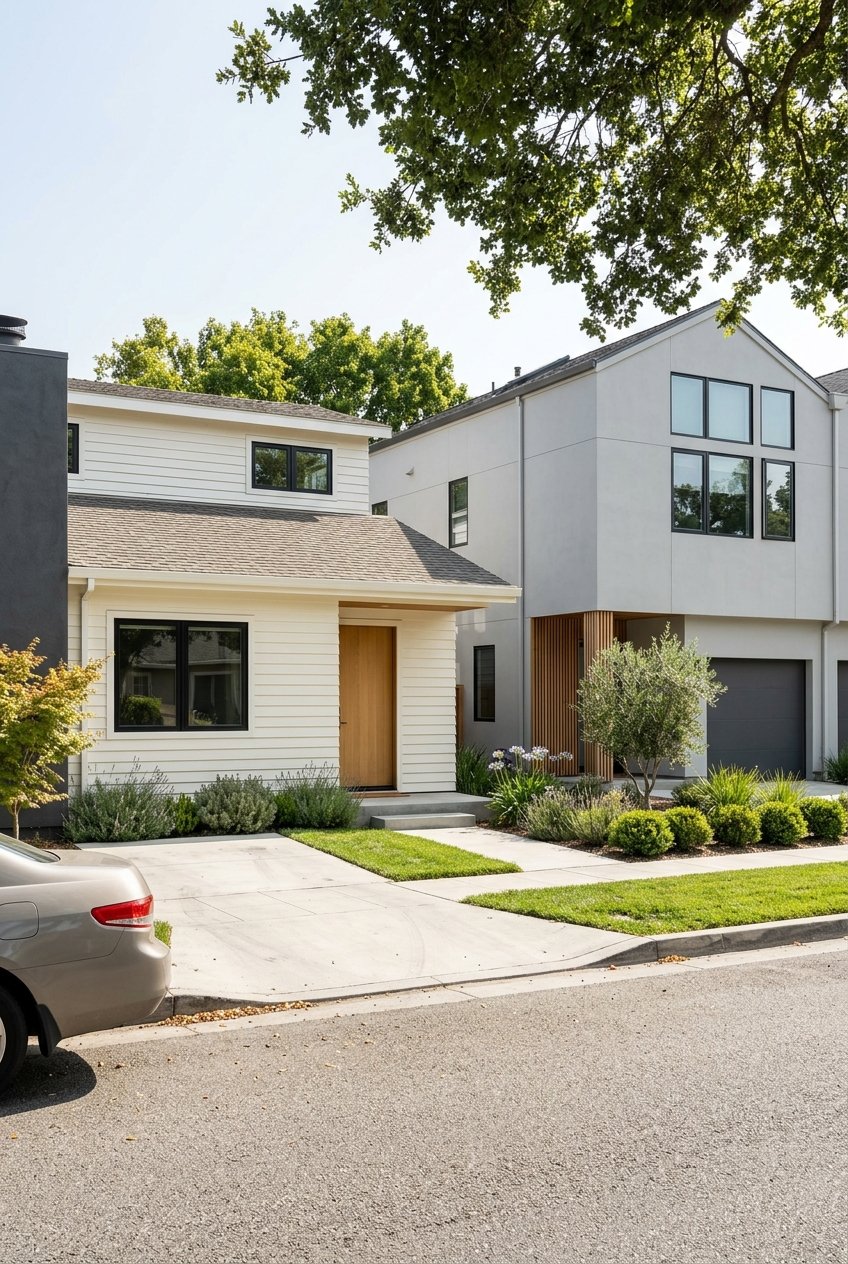
Wondering whether a detached home or a townhome makes more sense in Palo Alto? You are not alone. In a market where prices are high, homes move fast, and small details can carry big financial consequences, choosing the right property type matters just as much as choosing the right address. This guide will help you compare cost, maintenance, ownership structure, and day-to-day fit so you can make a more confident decision. Let’s dive in.
Palo Alto Price Gap Matters
If you are choosing between homes and townhomes in Palo Alto, the first thing to know is that the price gap is real. Recent market data showed a Palo Alto median sale price around $3.54M to $3.60M in spring 2026, with Zillow’s home value index near $3.68M in late April 2026.
Current listing snapshots also show a meaningful spread by property type. Detached homes in Palo Alto had visible asking prices from about $2.2M up to $24M, while townhomes showed visible prices from about $1.48M to $2.675M+, and Redfin reported a townhome median listing price of $1.89M.
That difference is a big reason many buyers start with townhomes when they want Palo Alto specifically. For some households, a townhome can be the more realistic entry point into the city while still keeping you in the local market you want.
Speed Still Shapes Your Options
Palo Alto remains a fast-moving market. Recent reports showed homes selling in about 10 to 12 days, with roughly 2 to 3 offers on average and sale-to-list pricing near 106%.
That means your decision usually cannot stay theoretical for long. If the right home or townhome appears, you may need to evaluate it quickly and decide whether the tradeoffs fit your budget and lifestyle.
What “Townhome” Really Means
One of the biggest points of confusion is that a townhome is not automatically a specific legal ownership type in California. The California Department of Real Estate explains that “townhome” is an architectural style, not a legal category defined by statute.
In practice, that means one townhome may be legally organized very differently from another. A townhome can be part of a condominium structure or a planned development, and the recorded ownership documents, not the exterior appearance, determine what you own and what the HOA controls.
This is why two properties that look similar from the street can come with very different responsibilities. You should not assume that a townhome automatically means the HOA handles the roof, siding, windows, patio, or yard.
Compare Ownership, Not Just Appearance
When you tour properties, it helps to look past the marketing label and focus on the actual ownership setup. The California DRE notes that common or exclusive-use items can include private streets, recreation areas, patios, driveways, parking spaces, windows, and other exterior elements.
That matters because your monthly costs and future repair exposure depend on those details. A detached home may give you more direct control, but it often means you take on more maintenance yourself. A townhome may reduce some upkeep, but only if the governing documents place those responsibilities with the HOA.
Detached Homes: More Control, More Responsibility
Detached homes often appeal to buyers who want more privacy and more freedom to manage the property directly. They can also be a better fit if you want greater control over finishes, exterior changes, and long-term maintenance decisions.
In Palo Alto listing snapshots, detached homes also showed a broad size range, from about 1,107 to 4,419 square feet in the visible results. That can give you more options if interior space, lot use, or future planning flexibility is high on your list.
The tradeoff is straightforward. With a detached home, you are usually taking on more of the repair and upkeep burden yourself, both financially and logistically.
Townhomes: Lower Entry Price, Shared Structure
Townhomes often attract buyers who want a smaller footprint and a lower purchase price than many detached Palo Alto homes. In the current listing snapshots, visible townhome sizes were mostly about 1,130 to 2,040 square feet.
For some buyers, that size range works well. You may get a more manageable home in a location you value, without stretching to the price point of a detached house.
Still, lower purchase price does not always mean lower total cost. HOA dues, reserve funding, and the possibility of future special assessments all affect what ownership really costs over time.
HOA Costs Need a Closer Look
If a townhome is part of a common-interest development, the HOA budget becomes part of your decision. In California, HOA dues typically fund day-to-day operations and reserves, while special assessments may cover major repairs, replacements, or unexpected common-area costs.
The HOA may also have the authority to impose fines or user fees if the governing documents allow it. So when you compare a detached home to a townhome, do not stop at the purchase price alone.
Instead, look at the full carrying cost. A townhome with lower upfront cost can become less attractive if dues are high, reserves are weak, or a major repair project may lead to added assessments.
Questions to Ask About a Palo Alto Townhome
Before you move forward on a townhome, make sure you get answers to the practical questions that affect your budget and daily life.
Maintenance Questions
- Who is responsible for the roof?
- Who maintains siding, windows, and fences?
- Are patios, driveways, or private streets common area or exclusive-use area?
- What exterior items are your responsibility versus the HOA’s responsibility?
Budget Questions
- How much are the HOA dues?
- What exactly do those dues fund?
- Has the HOA had recent special assessments?
- Are there signs of reserve shortfalls or large upcoming repairs?
Rules and Use Questions
- Are there rental caps or other use restrictions?
- Are there unresolved violation notices tied to the property?
- Are there shared amenities that affect monthly cost?
- Are there exclusive-use areas that still require owner upkeep?
California Resale Disclosures Matter
California gives buyers important disclosure rights when purchasing in a common-interest development. Under state law, the seller must provide governing documents, current regular and special assessments and unpaid amounts, unresolved violation notices, approved but not yet due assessment changes, rental restrictions, requested board minutes, and the latest Section 5551 inspection report.
That last item is especially worth noting. The statute was amended effective January 1, 2026, so the Section 5551 inspection report is now part of the required resale packet.
For you as a buyer, this means the document review stage is critical. It is where you often learn whether a property that seemed simple on the surface carries added rules, costs, or repair exposure.
Lifestyle Fit Is Personal
Numbers matter, but so does how you want to live. A detached home may be the better fit if you value privacy, direct control, and fewer HOA rules in your day-to-day ownership experience.
A townhome may be the better fit if you want a more compact home, potentially less exterior upkeep, and a lower price point within Palo Alto. Neither option is automatically better. The right choice depends on how you weigh budget, maintenance, space, and control.
Nearby Cities May Enter the Conversation
Some buyers comparing Palo Alto townhomes also look at detached homes in nearby cities. Late-April 2026 Zillow benchmarks showed typical home values around $2.03M in Mountain View, $1.89M in Redwood City, $2.14M in Sunnyvale, and $3.18M in Cupertino.
That context helps explain a common decision point. You may find that a Palo Alto townhome competes financially with a detached home in another city, depending on the neighborhood and property type.
This is where priorities become clearer. If Palo Alto itself is your top priority, a townhome may help you stay in the city at a lower price point. If detached living matters more, expanding your search to nearby markets may open different options.
A Simple Way to Decide
If you feel torn, use a structured comparison instead of relying on first impressions. Start with these four categories:
1. Budget
Compare not just the price, but also dues, reserves, likely maintenance, and potential assessment risk.
2. Control
Think about how much freedom you want over repairs, exterior changes, and long-term planning.
3. Time and Upkeep
Be honest about whether you want to manage maintenance yourself or prefer a shared structure that may handle some of it.
4. Location Priorities
Decide whether staying in Palo Alto matters more than getting a detached property type in a nearby city.
When you look at homes through those four lenses, the right choice often becomes much easier to see.
If you are weighing a detached home against a townhome in Palo Alto, a clear side-by-side review of pricing, documents, and ownership responsibilities can save you time and stress. Clara Lee can help you compare options, understand the fine print, and move forward with a plan that fits your goals.
FAQs
What is the main price difference between homes and townhomes in Palo Alto?
- Recent listing snapshots showed detached Palo Alto homes from about $2.2M to $24M, while townhomes were about $1.48M to $2.675M+, with a reported Palo Alto townhome median listing price of $1.89M.
What does “townhome” mean legally in California?
- In California, “townhome” is an architectural style, not a legal ownership category, so you need to review the recorded ownership documents to know what is owned individually and what falls under the HOA.
What should you review before buying a Palo Alto townhome?
- You should review the CC&Rs, current and special assessments, unpaid amounts, unresolved violation notices, approved assessment changes, rental restrictions, requested board minutes, and the latest Section 5551 inspection report.
What costs should you compare between a Palo Alto home and townhome?
- Compare purchase price, HOA dues, reserve strength, possible special assessments, and the likely maintenance costs you would carry directly as the owner.
Why do some buyers compare Palo Alto townhomes with detached homes in nearby cities?
- Nearby city home values in places like Mountain View, Redwood City, and Sunnyvale have generally been lower than Palo Alto, so some buyers find that a Palo Alto townhome and a detached home elsewhere can fall into a similar price conversation.